
This is an ongoing project at its preliminary stage.
Overview
This project researches the development of adaptive textiles for individuals with autism to address sensory sensitivities. It focuses on sensory-friendly fabrics, exploring properties like texture, color, and touch, while advancing concepts like psychotextiles and compression clothing.
My brother is autistic, so most of my research is focused on people with autism at his rehabilitation center.
Challenges Addressed
- Limited availability of sensory-sensitive clothing
- Discomfort caused by rough textures, trims, and inappropriate colors
- Lack of research on tactile-friendly textiles for autism
Preliminary Research
- Conducted a questionnaire survey targeting parents and caregivers
- Analyzed preferences for fabrics, tactile properties, and color perception
Key Findings
Touch matters most. Autism is a spectrum disorder where individuals can be hypersensitive or hyposensitive to stimuli like sound, touch, or smell. Among 13 respondents, 9 identified touch as the most impactful stimulus, followed by sight and sound. This highlights the need for carefully designed fabrics that cater to sensory sensitivities, as textiles significantly influence touch and sight stimuli.
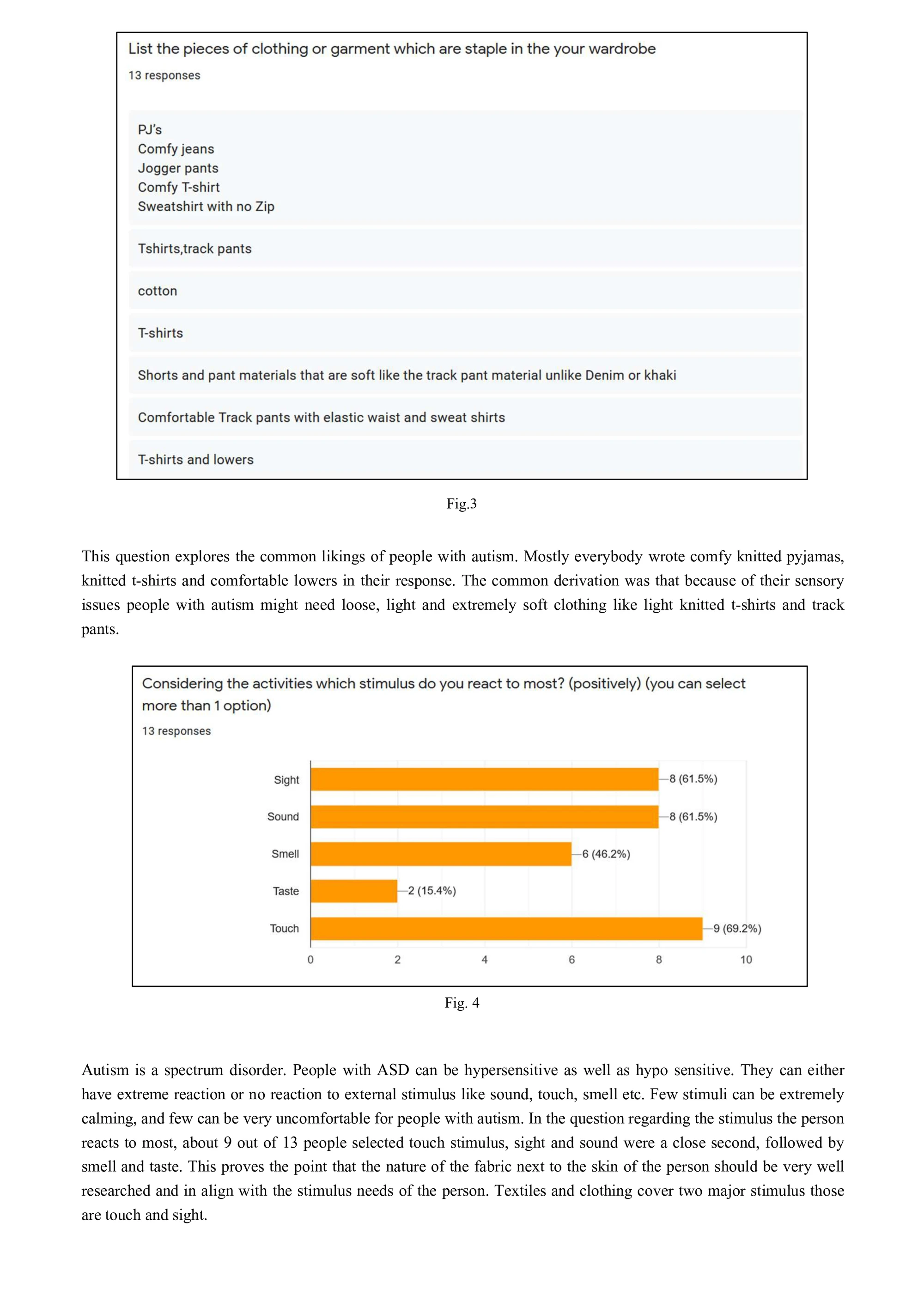
Soft, loose everyday wear. Most respondents favored loose, lightweight, and soft clothing like knitted pajamas, t-shirts, and track pants, reflecting the sensory preferences of individuals with autism.
Knits preferred. Knits have the softest texture of all, so the majority of respondents preferred them.
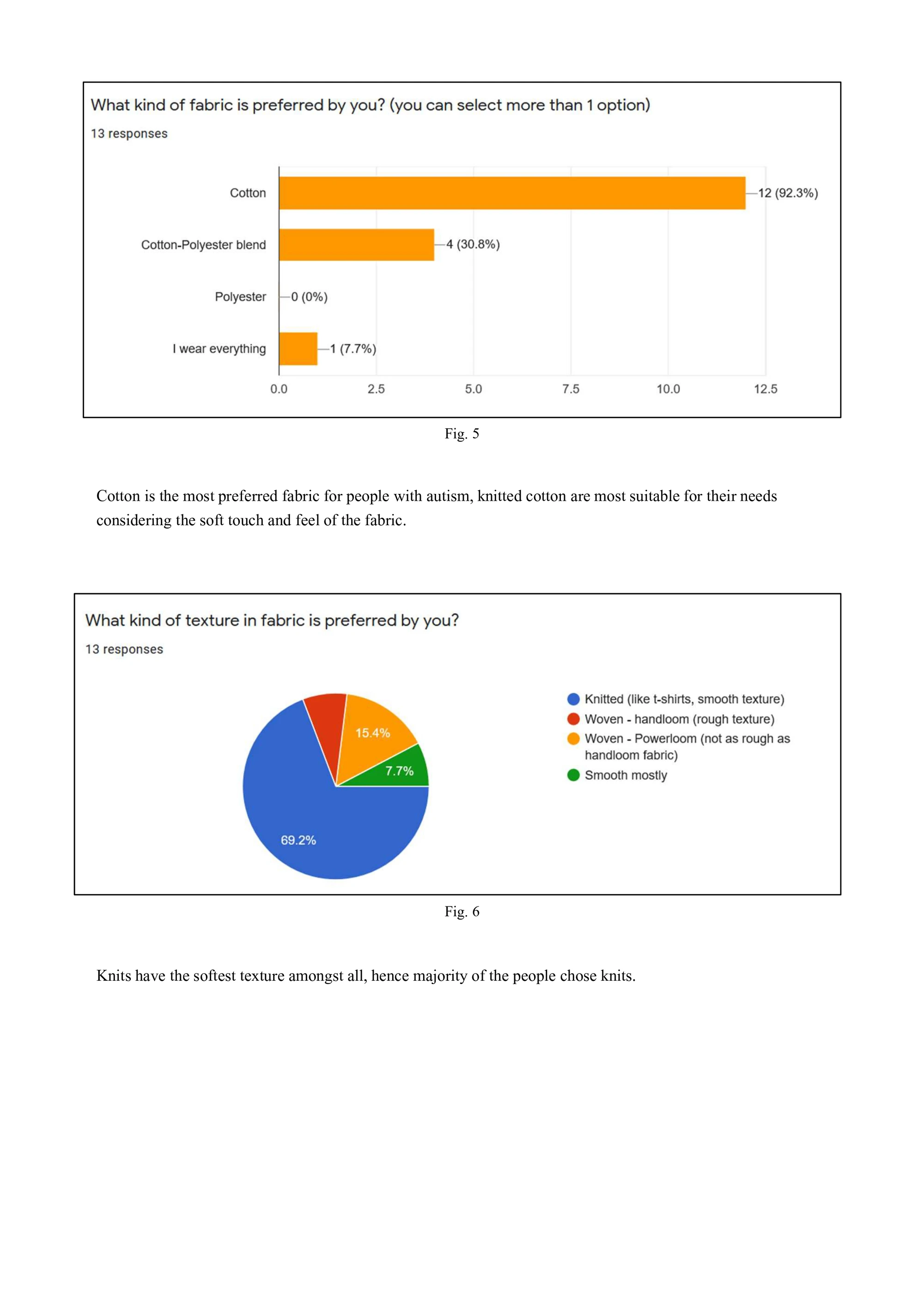
Warm colors. Colors play a key role in sight stimulus. Warm colors like yellow and orange were preferred by 38.5% of respondents for their uplifting effect.
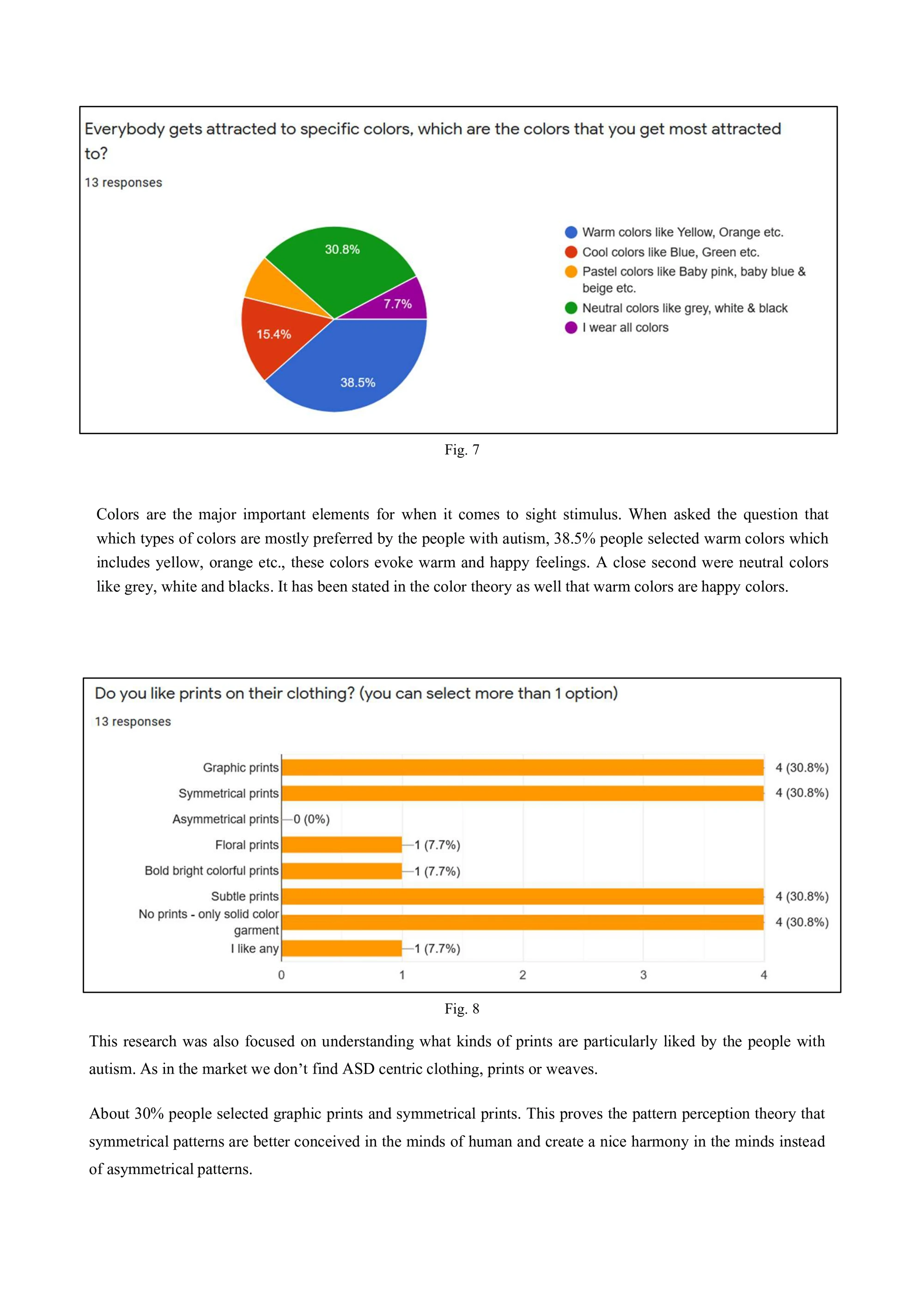
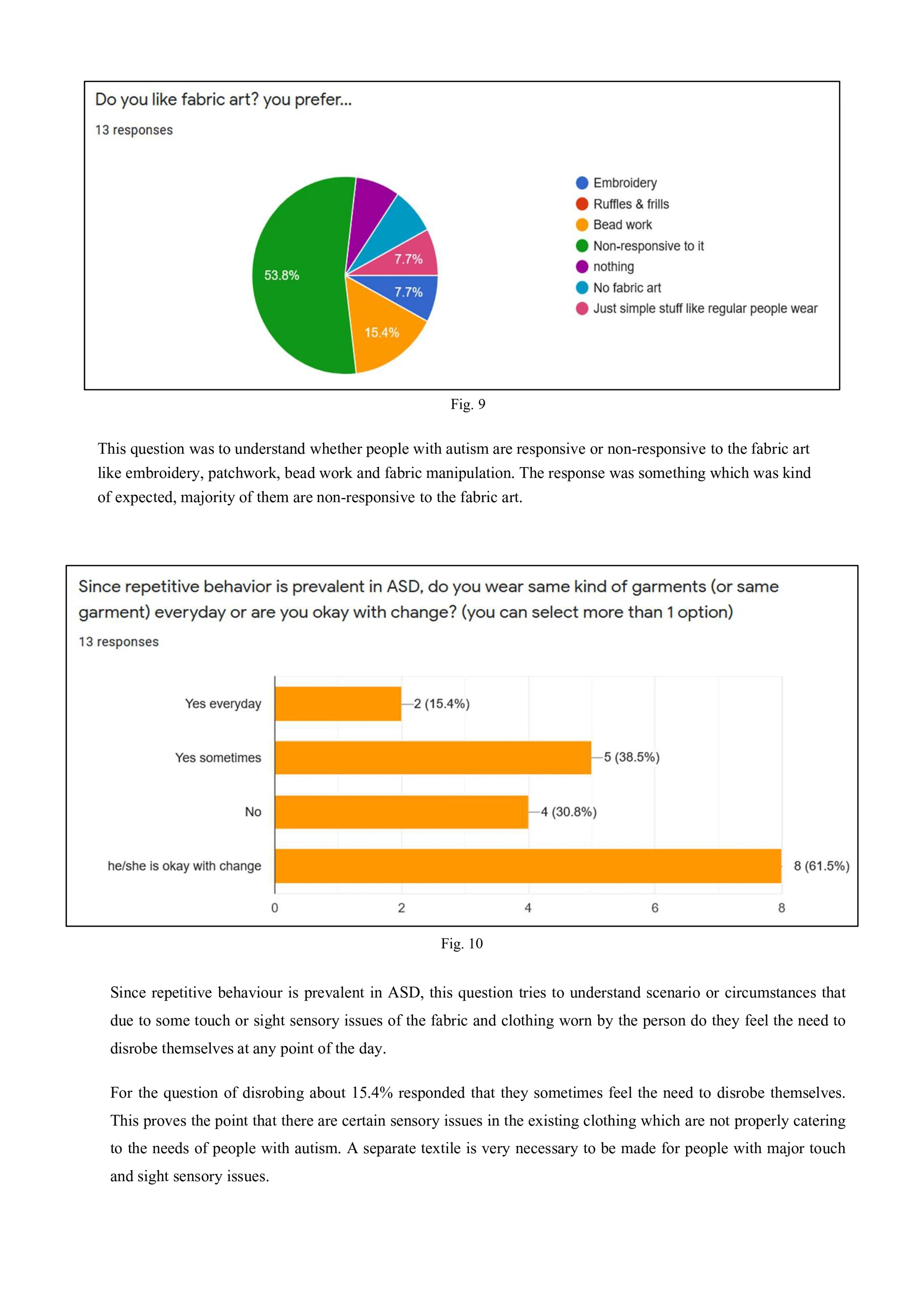
Fabric discomfort and disrobing. Repetitive behaviors in ASD prompt sensory-driven disrobing. About 15.4% reported feeling the need to disrobe due to fabric discomfort, highlighting the need for specialized textiles.
Proposed Fabric Qualities
I researched, analyzed, and proposed textile solutions tailored for sensory-sensitive individuals, leveraging user insights and scientific studies to design autism-friendly garments.
- Soft feel and fall
- High abrasion resistance
- Good air permeability
- Anti-microbial properties
- Anti-pilling property
- Washing and crocking fastness
- High fabric strength
Future Research Scope
- Psychotextiles: futuristic textiles that change patterns or colors based on sensory input, to support emotional regulation and reduce sensory overload
- Adaptive textiles: clothing with soft, tactile-friendly fabrics, free of rough textures and labels, to reduce sensory discomfort
- Compression clothing: wearables like weighted vests for deep-pressure therapy, creating a calming effect
- Home furnishings: psychotextiles in bedrooms and sensory spaces to create a calming environment